 Skip to content
Most businesses blame Google Ads when they don’t get leads.
But in reality, the problem usually isn’t the ads.
It’s the website.
During a recent Google Ads campaign for a Kenyan logistics company, we discovered something eye-opening:
Nearly 90% of all clicks were coming from mobile devices.
Yet the website was not built for mobile conversions.
That single disconnect was costing the business leads every day.
Mobile Traffic Is No Longer Optional
Today, mobile dominates online traffic.
In our campaign:
- 87% of clicks came from mobile
- Mobile CPC was just $0.16
- Desktop CPC was $0.47
Mobile users were cheaper, faster, and more active.
But the website experience didn’t match their behavior.
Slow load times, unclear service sections, and weak calls-to-action were silently killing conversions.
The Real Reason Google Ads Don’t Convert
Here’s the hard truth:
Google Ads only brings visitors.
Your website decides whether they become customers.
If your mobile site is slow:
- Users bounce
- Quality Scores drop
- Cost per click increases
- Leads disappear
Most businesses spend money driving traffic…
then lose it at the website level.
Our Mobile-First Optimization Strategy
Mobile optimization plays a huge role in ad performance. We explain this in detail in our guide on why most Google Ads fail on mobile and how we fixed it for a Kenyan business, where we break down mobile user behavior and conversion mistakes
Instead of changing ads, we fixed the foundation.
At Axiom Web Solution, we apply a mobile-first conversion framework.
Here’s what we did:
1. Website Speed Optimization
- Reduced image sizes
- Cleaned unused scripts
- Improved Core Web Vitals
- Increased server response speed
2. Mobile UX Improvements
- Clear services above the fold
- Simplified navigation
- Strong contact buttons
- Easier form completion
3. Conversion-Focused Layout
- Direct messaging
- Trust elements
- Action-driven CTAs
After optimization, the website achieved 90–100% performance scores.
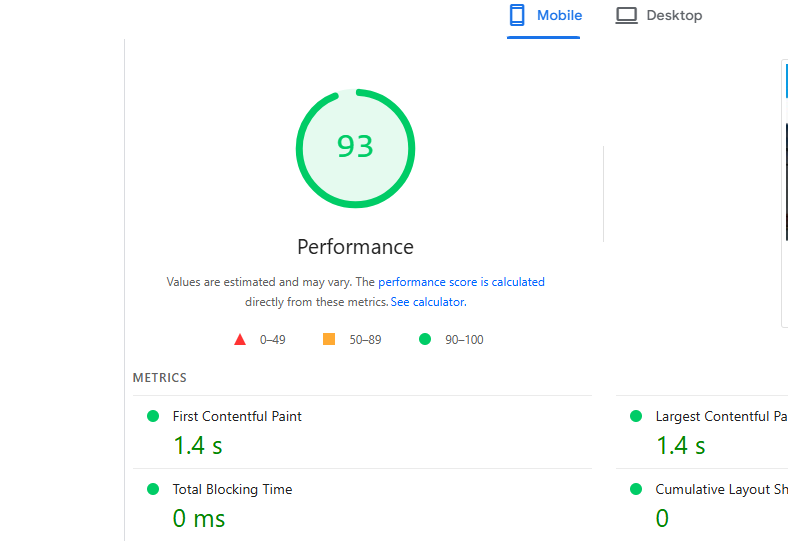
The Results: More Leads Without Increasing Ad Spend
Once the website was optimized:
- Conversions increased
- Cost per click dropped
- Engagement improved
- Lead quality rose
The same campaign ad group delivered:
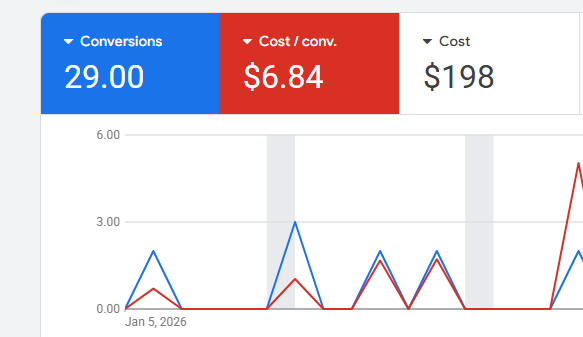
- 29 conversions from $198 spend
- $6.84 average CPA
- Peak days at $0.50 CPA
- Conversion rates as high as 22%
Same ads.
Same audience.
Better website.
Why Website Speed Matters for SEO and AI Search
Website speed doesn’t just affect Google Ads.
It also impacts:
- Google rankings
- User trust
- AI search visibility (ChatGPT, Gemini, Copilot)
- Brand authority
Fast websites:
- Rank higher
- Convert better
- Get cited more by AI
- Create stronger user signals
That’s why our AI SEO Optimization (AISO) framework starts with technical performance.
Learn More: Why Your Business Isn’t Showing on Google in Kenya
The Biggest Lesson for Business Owners
Ads don’t fail.
Websites fail.
You cannot scale traffic without fixing conversion infrastructure.
Speed is not a luxury.
It’s a revenue lever.
Is Your Website Ready for Mobile Leads?
If you’re running Google Ads or SEO but not getting consistent inquiries, your website is probably the bottleneck.
At Axiom Web Solution, we help Kenyan businesses:
- Optimize mobile performance
- Improve website speed
- Rank on Google
- Appear in AI search results
- Generate qualified leads
Get a Free Mobile Speed & Conversion Audit
Want to know how your website performs on mobile?
Send your website at info@axiomwebsoulution.com and we’ll run a free website speed check + conversion check.
Stop losing mobile leads.
Start converting traffic into customers.
Why do most Google Ads fail on mobile?
Because websites are slow and not optimized for mobile users.
What is a good mobile website speed score?
Ideally 90% or higher for best conversion performance.
Does website speed affect SEO?
Yes. Speed is a Google ranking factor and impacts user experience signals.
